IrisBG
Spotlight
Jena Portanova
Plant Records Manager, Houston Botanic Garden
We have come to know Jena Portanova as more than an IrisBG user. She is also a valuable partner with the recent beta testing of the IrisBG - ArcGIS sync. Her knowledge of GIS and data analysis is a valuable asset to her community as well. Jena is generous with advice to newer IrisBG users, and always welcoming. In the following paragraphs, Jena explains how she's arrived at this point in her career, and shares the joy she has for the environment, people, plants, and placing plants on the map.
When did you know you wanted a career in Botany?
A year into coursework at San Francisco State College, I was struck with the reality that my passion for plants could be my career. Having sold my tiny condo the prior year in Santa Ana, California, I felt the freedom to quit my corporate job and take that leap. I scrapped my original plan to get a BA and go to law school to practice intellectual property rights law. I realized it was now or never for taking a chance. So, I set out to study Botany at California State Polytechnic University of Pomona.
As an undergrad, I became enamored with Plant Anatomy, Physiology, and Ecology. I loved how each of these subjects tells an informative story of the plant and its role in the environment. After graduating with my BS in Botany, I felt there was more to learn from the faculty and stayed for my MS in Biology. I was part of a long-term plant ecology study under the guidance of my thesis chair and "College Dad", Dr. Edward G Bobich. I respected his no-nonsense approach to experimental design and his ability to see the long-term potential in projects. He is a wealth of botanical knowledge and is passionate about teaching, which inspired me to also teach.
I taught Botany and Biology labs, which pushed me to know the subject matter intimately. As part of my thesis, I continued experimenting with geospatial analysis and modeling to see how technology and plants could come together. In December 2014, I defended my thesis and graduated. Shortly after graduation, my partner and I started a family. I taught Ecology part-time at Marymount California University (where my partner worked) when my journey then resumed its winding path.
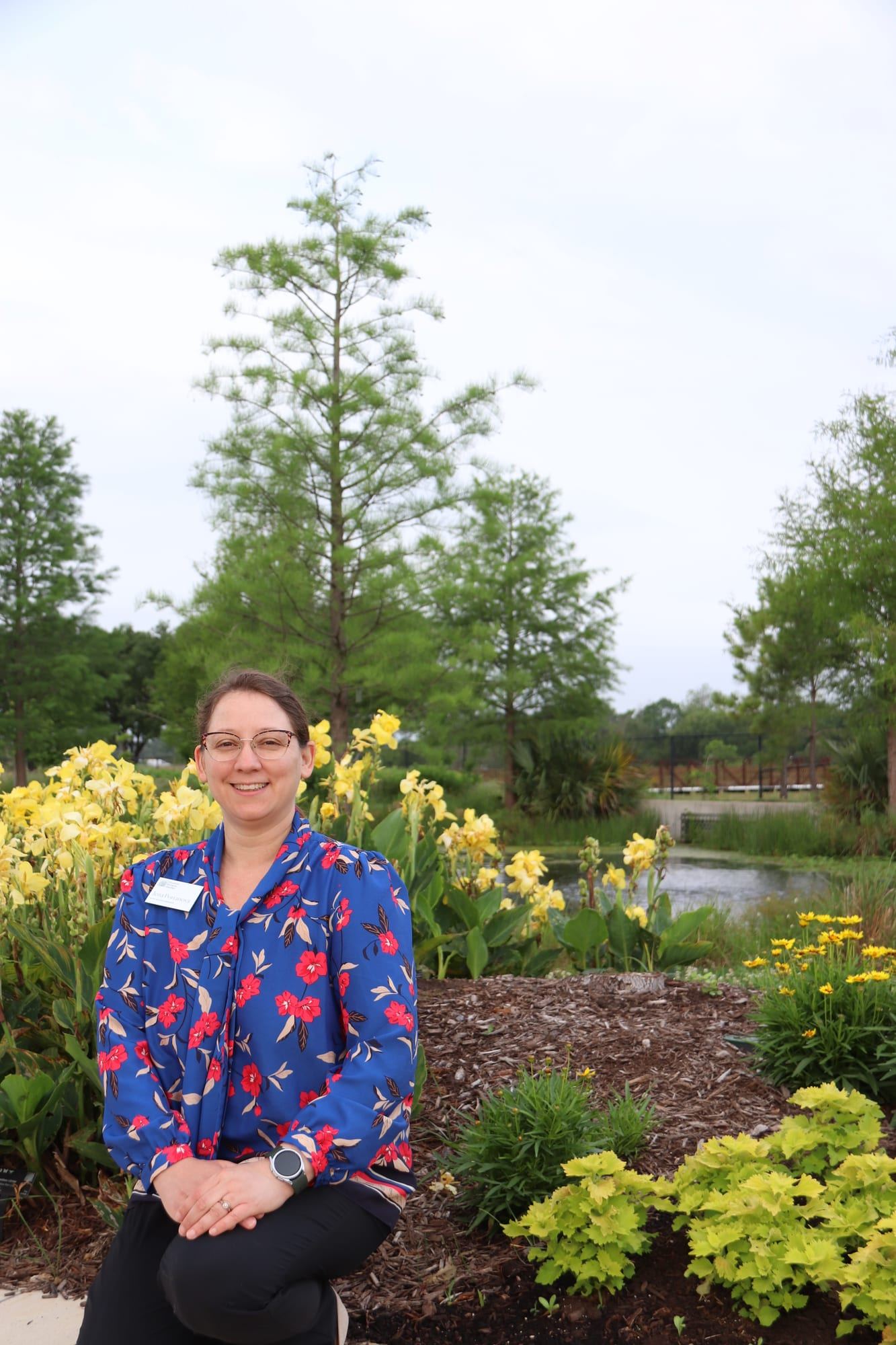
In 2017, we moved to Houston for my partner’s career. I was eager to jump back into Botany in a new city, but I struggled to find related work. I leaned into my GIS knowledge, becoming a GIS analyst producing enterprise solutions that ranged from web apps and print maps to database management, modeling, and analysis- all skills I put to the test even today. When Covid hit, I joined what felt like all of Houston in looking for work and picking up the pieces.
I was fortunate to gain work at the Texas Commission on Environmental Quality, where I learned a lot about the city of Houston, its utilities, and environmental policies, alongside some of the most caring and dedicated civil servants.
While there, I applied to volunteer at the newly established Houston Botanic Garden, where I noticed their job posting for a Plant Records Manager. The role was seemingly made for me, and I realized my winding journey had finished its detour. The rest feels like history, and now I feel fortunate to be in a role so rewarding; one where I connect plants and the environment to people, all while tossing in fun plant facts and puns.
Is there a particular tree or plant or horticulture-related event that you have learned a valuable lesson from or about?
As a part of the Horticulture team, I’ve learned a great deal from my other mentor, Dr. Fran de la Mota, alongside our current knockout team. If I had to pick one lesson, it is reading trees. Being able to look at an individual tree from root to the canopy, and envision their future in a Garden for the next 10, 20, to 50 years from now resonates with me. I am learning to quickly identify the signs of poor root systems from nursery growers, and when and how to prune a mature oak.
Which garden tool/aid could you not live without?
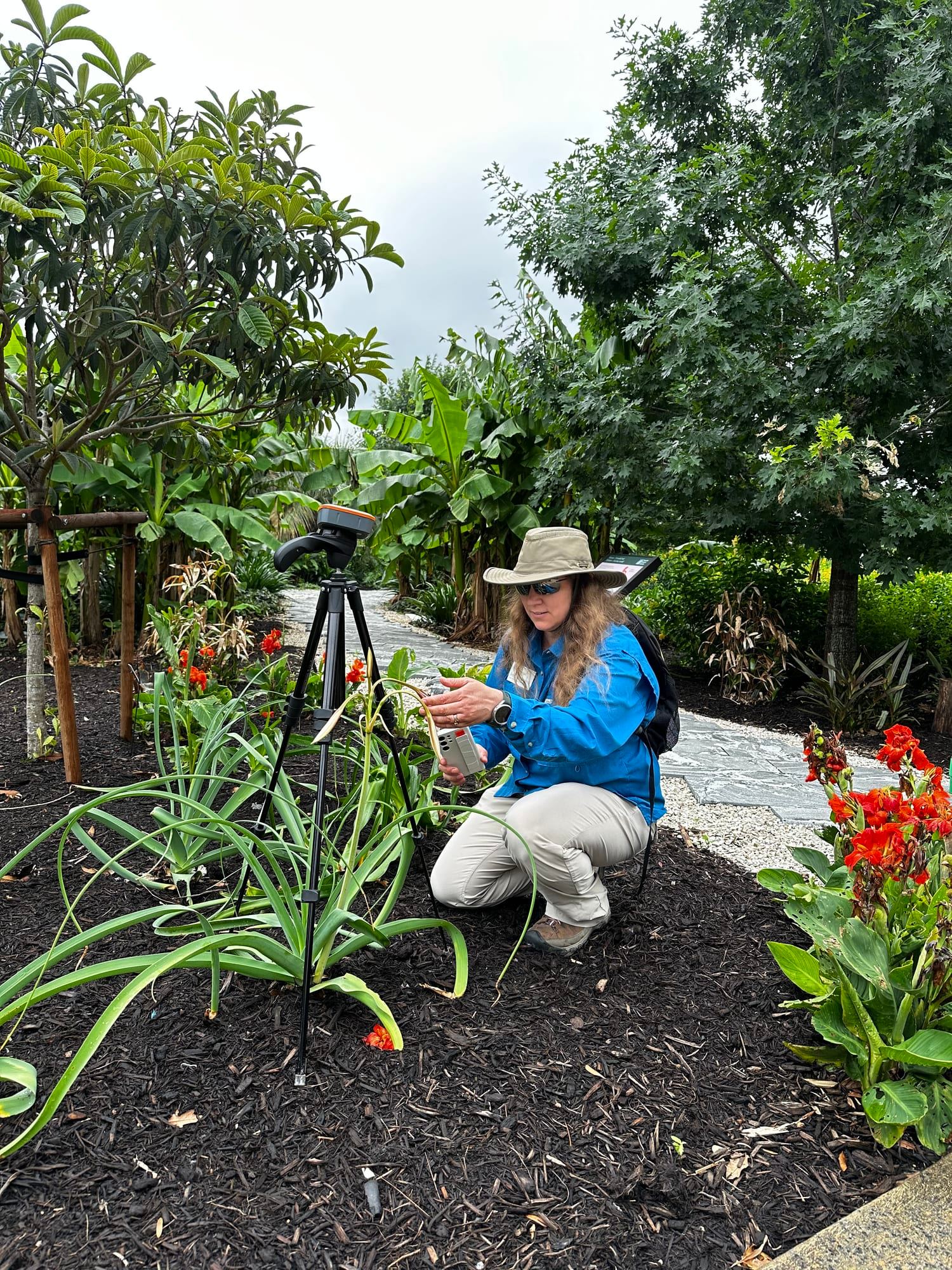
I love my Silky handsaw, but I don’t use it here in the Garden. Instead, my go-to tool at the Garden is the Geode GNS2 receiver, which I use for mapping. One of the biggest advantages you can gain in your Garden is knowing where your plants are. Everything from Living Collections inventory to label management starts with two questions: What is it? Where is it? I grab my hat, phone, and my receiver, and, in a matter of minutes, I’m connecting the plants to the Living Collections Database and building a resource that will support the Garden’s current and future initiatives, goals, and mission.
What have you found the most handy IrisBG function to use?
I find the duplicate ‘+’ function to be a great time saver, especially when I am accessioning in a large order with the same reference info.
Workflow-wise, the ability to define codes and set custom taxon and accession codes is a game changer for reports and data aggregating. It allows me to answer questions that seem simple like, “How many medicinal plants are onsite?” or “How many pounds of culinary crops did we harvest and donate?” I’m hopeful the function will extend to accession items soon.
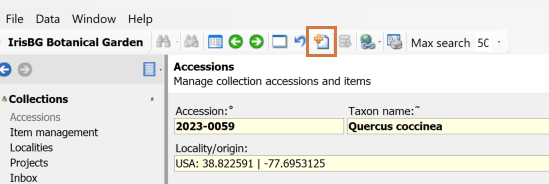
Screenshot depicting the button, "copy current data to new registration".
It is a close tie between the Statistics Collection Reports (06 Statistics) and the 02 Accession items: Item02GIS report, but some days it feels like I run just about every report category. Those in the data world know that just because the data is in an application, it does not mean it is easily accessible or easy to export, let alone export in its entirety.
I appreciate that IrisBG’s default reports can get me most of what I need. If I dedicate a bit of time to choosing or defining fields, I can quickly produce the same report in minutes. For the more obscure data needs I do have to get creative, but, even still, the reports module is indispensable.
Do you have a book or podcast that you would like to recommend?
I’ve been looking to up my podcast game, but I’m behind. When it comes to plant anatomy and ID there is no shortage of terms. For those looking for a great reference, I recommend “Plant Identification Terminology: An Illustrated Glossary” by James G. Harris and Melinda Woolf Harris".
What is one thing that most people wouldn't guess about you?
I’m a big fan of animation. I particularly enjoy anime (Japanese animation) and donghua (Chinese animation) that contain stunning botanical elements or adventures with cooking. If it is about food or plants, chances are I’ll love it.